
Cheung Chau sourdough
- Natural yeast Rye bread tasting food stand

Baptist University x German Business and Career Expo 2026
在長洲這個小漁島上,一切從好奇心開始。一個人靠著網絡與郵購,訂來白麵粉、全麥麵粉與黑麥麵粉,為每種穀物各自培育一株天然野生酵母——誤打誤撞,竟走進了黑麥的世界,接觸到德國與北歐千年的麵包傳統。黑麥在寒冷貧瘠的土地上生長,是整個北歐文明的日常主食;而長洲島的野生酵母,與這來自遠方的穀物相遇,在瓶子裡悄悄發酵,成為一次跨越地域的對話。傳統發酵食物,從不在乎國籍——它是全人類共通的語言,以食物拉近人與人之間的距離。
On the small fishing island of Cheung Chau, everything began with curiosity. Through the internet and mail-order suppliers, a baker sourced three flours — plain white, wholegrain, and rye — and cultivated a separate wild yeast starter for each grain. It was by chance that this path led into the world of rye, and through rye, into centuries of German and Northern European bread tradition. Rye thrives on cold, poor soil — the daily bread of an entire civilisation. When Cheung Chau's wild yeast met this grain from a distant land, something quietly fermented between two worlds. Traditional fermented food has never cared about nationality — it is a common language shared across all of humanity, one that brings people closer through the simple act of eating together.

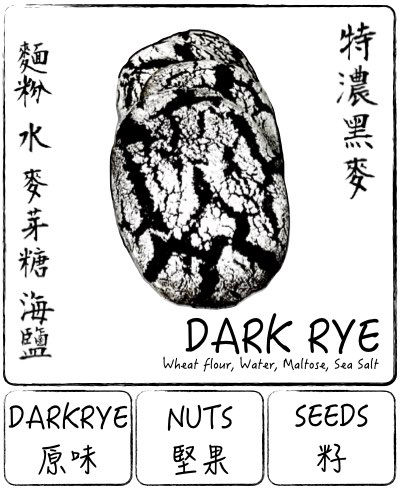
當日餐桌上,將呈獻兩款黑麥酸種麵包切片:Rye Sourdough(黑麥酸種)以天然野生酵母長時間低溫發酵,質地紮實,帶有清幽酸香;Dark Rye(深黑麥)黑麥比例更高,色深味濃,正是德國傳統 Roggenbrot 的精神所在。 配搭方面,以香草浸製特級初榨橄欖油蘸食,讓麥香與大地氣息完整呈現;另備黑菲爾乳酪醬(Kefir Cheese Spread)——以天然菲爾粒發酵製成的軟滑乳酪,微酸清爽,與黑麥麵包的厚重風味相輔相成,正是德國 Brotzeit 文化裡最樸素而深刻的一種吃法。
For the Expo, two rye sourdough breads will be served as sliced tasting portions. Rye Sourdough is long cold-fermented with wild yeast, offering a firm crumb with a gentle, lingering tang. Dark Rye carries a higher rye content — deep in colour, bold in flavour — true in spirit to the German Roggenbrot tradition. Both are paired with herb-infused extra virgin olive oil for dipping, allowing the natural earthiness of the grain to speak without distraction. Alongside, a Kefir Cheese Spread — a soft, lightly soured cheese crafted from fermented kefir grains — brings a cool, creamy contrast that balances the density of dark rye, echoing the honest simplicity of the German Brotzeit table.
酵母
YEAST


我在麵包中使用的是由麵粉、水果和時間培養出來的天然酵母,而不是單一的商業酵母。商業麵包酵母通常是單一菌株的 Saccharomyces cerevisiae,發酵速度快、表現穩定,但風味比較直接和單一。 相對地,我的天然酵母是多種野生酵母和乳酸菌(例如 Lactobacillus 等)共同生活的系統,原本就存在於果皮、小麥和烘焙空間之中。 這種較慢的共生發酵,會產生更多有機酸和香味物質,做出來的麵包風味更立體、較易消化,也通常比只用速效酵母的麵包更耐放。 1. > 天然酵母從哪裡來? 酵母係一種「真菌」,肉眼睇唔到,存在喺大自然好多地方:泥土、水、空氣、植物表面,特別係成熟水果同穀物外皮上。喺果樹身上,野生酵母會住喺樹皮、葉面同果皮(科學上叫 phyllosphere、rhizosphere),同細菌一齊形成一個微生物社區。有研究喺檸檬、無花果等水果皮上,搵到十幾種唔同酵母品種,包括天然存在嘅 Saccharomyces 同其他非 Saccharomyces 酵母。 小麥同其他穀物本身都帶住自己嘅微生物:酵母同乳酸菌黐喺麩皮同粉粒上,當你加水、攪勻、畀時間,就變成 sourdough 嘅起點。所以「天然酵母/野生酵母」唔係一包特別嘅工業產品,而係麵粉、水果、穀物同烘焙環境裡面,本身就存在嘅微生物。 2. 果實酵母水(Fruit Yeast Water)係點運作? 水果酵母水,其實就係創造一個細小生態系統,等水果表面嘅酵母同細菌醒返、食糖、繁殖。用乾淨、新鮮、有「天然果皮」嘅水果(例如提子、蘋果、柑橘、無花果)水果切件或切煲刀,加入玻璃樽,注入乾淨飲用水(有時會加少少糖或蜜糖,畀佢哋做「糧食」)。室溫放置,果皮上嘅微生物開始發酵:酵母將糖變成二氧化碳同少量酒精,細菌就產生有機酸。大概 2–5 日之後,入面開始起泡、有輕微水果酒香味,就係「酵母水」,可以用嚟做麵包嘅液種或中種。七日佢就會到達飽和就合適使用,七日和生命有莫大的關係, 果實酵母水入面嘅菌種通常係混合型: 常見有 Saccharomyces cerevisiae 或其他近親酵母,亦都有 Pichia、Candida 等非 Saccharomyces 酵母,加上一啲乳酸菌。呢個「多物種共生」就係點解用水果酵母做出嚟嘅麵包,香味層次會同「淨用商業酵母」好唔同。 3. 天然酵母 vs 商業酵母 喺微生物層面,商業麵包酵母幾乎永遠都係單一物種:Saccharomyces cerevisiae(釀酒酵母)。人類經過好長時間「馴化」呢個物種,揀咗一啲可以:發酵速度好快產氣量多、撐得起麵團味道相對中性、易於控制, 可以大量培養、壓成磚或乾燥嘅菌株. 相反,自然/野生酵母系統(例如 sourdough、果實酵母水),幾乎一定係「混合社區」,唔係單一菌株。 商業酵母 = 一個被馴化好耐嘅 Saccharomyces cerevisiae 菌株,發酵快、結果可預期,但風味比較單一。 自然酵母/野生酵母 = 多種酵母 + 乳酸菌一齊生活,發酵相對慢,但酸味、香氣、口感層次都多得多,每個「屋企酵母」都有自己性格。 5.> 點解 Lactobacillus(乳酸菌)咁重要?好多 sourdough 研究都強調:乳酸菌其實同酵母一樣重要,甚至喺風味、口感、營養上更關鍵。乳酸菌主要來自麵粉、原料同烘焙環境,長時間餵養之後,會慢慢適應你個 sourdough 系統,變成「你屋企專屬嘅菌群」。 乳酸菌喺麵包入面主要做幾件事: > 產酸: 將糖轉成乳酸、醋酸,令麵團 pH 降低,形成 sourdough 嘅酸味,同時抑制壞菌同霉菌。 > 造香: 乳酸菌會分解蛋白質、澱粉,釋放出胺基酸同香味物質,帶出堅果味、水果味、奶油味等複雜香氣。 影響口感與保存: 酸度加上菌種分泌的酵素,會柔化麵筋和澱粉,令麵包內部更柔軟、較耐乾硬,保存期延長。 營養與消化: 乳酸菌可幫手降解某啲抗營養因子、改善礦物質吸收、減低某些有害化合物,對部分人腸胃會較易接受。 「野生酵母 + 乳酸菌共發酵」,同一般只用單一商業酵母、短時間發酵嘅麵包,喺微生物、生理效果同風味上都完全唔同。 ------------------------------------------ I use a natural leaven grown from flour, fruit and time, rather than a single commercial yeast strain. Commercial baker’s yeast is usually just one strain of Saccharomyces cerevisiae, which ferments fast, behaves predictably, but gives a more direct and simple flavour. In contrast, my natural starter is a whole community of wild yeasts and lactic acid bacteria (such as Lactobacillus), originally living on fruit skins, wheat and in the baking space. This slower, symbiotic fermentation produces more organic acids and aromatic compounds, so the bread has a more layered flavour, is often easier to digest, and usually keeps better than bread made only with instant yeast. Where does natural yeast come from? Yeast is a type of fungus, invisible to the naked eye, found all over nature: in soil, water, air and on plant surfaces, especially on ripe fruit and the outer bran of grains. On fruit trees, wild yeasts live on the bark, leaves and skins (scientists call this the phyllosphere and rhizosphere), forming a microbial community together with bacteria. Studies on fruits like lemons and figs have found more than a dozen different yeast species on their skins, including Saccharomyces and many non‑Saccharomyces yeasts. Wheat and other grains also carry their own microbes: yeasts and lactic acid bacteria cling to the bran and grain surface, and when you add water, mix, and give them time, that becomes the starting point of sourdough. So “natural” or “wild” yeast is not a special industrial product in a packet, but the microorganisms that are already present in flour, fruit, grain and the baking environment. How does fruit yeast water work? Fruit yeast water is basically a tiny ecosystem that wakes up the yeasts and bacteria living on the fruit surface and lets them feed and multiply. You use clean, fresh fruit with natural skins (such as grapes, apples, citrus or figs), cut them up, put them in a glass jar, and cover with clean drinking water (sometimes with a bit of sugar or honey as extra “food”). At room temperature, the microbes on the peel start fermenting: yeasts turn sugars into carbon dioxide and a little alcohol, while bacteria produce organic acids. After about 2–5 days the liquid starts to bubble and smell lightly of fruity wine – that is your “yeast water”, which you can use as a liquid starter or preferment for bread. Around day 7 it usually reaches its peak and is a good time to use it; that seven‑day rhythm also quietly echoes many natural life cycles. The microbial community in fruit yeast water is usually mixed: Commonly there is Saccharomyces cerevisiae or related yeasts, along with non‑Saccharomyces yeasts like Pichia and Candida, plus some lactic acid bacteria. This “multi‑species co‑living” is why bread made with fruit yeast has a very different aroma profile from bread made with pure commercial yeast alone. Natural yeast vs. commercial yeast On the microbial level, commercial baker’s yeast is almost always a single species: Saccharomyces cerevisiae. Humans have spent a long time “domesticating” this species, selecting strains that ferment very quickly, produce lots of gas, support a neutral dough flavour, are easy to control, and can be grown on a large scale, compressed into blocks or dried into granules. Natural or wild yeast systems (like sourdough or fruit yeast water) are almost always “mixed communities” rather than a single strain. Commercial yeast = a long‑domesticated Saccharomyces cerevisiae strain: fast fermentation, reliable results, but relatively simple flavour. Natural / wild yeast = multiple yeasts plus lactic acid bacteria living together: slower fermentation, but with much more depth in acidity, aroma and texture, and every “house starter” develops its own personality. Why is Lactobacillus (lactic acid bacteria) so important? Many sourdough studies emphasise that lactic acid bacteria are just as important as yeast, and in terms of flavour, texture and nutrition they may be even more crucial. They mainly come from the flour, ingredients and baking environment, and after long‑term feeding they gradually adapt to your sourdough system and become “your home’s own microbiome”. In bread, lactic acid bacteria mainly do a few things: – Acid production: They convert sugars into lactic and acetic acid, lowering the dough’s pH, creating sourdough’s acidity and at the same time inhibiting spoilage bacteria and moulds. – Aroma: They break down proteins and starch, releasing amino acids and flavour compounds that bring out nutty, fruity and buttery notes and other complex aromas. – Texture and keeping quality: Acidity plus enzymes from the microbes soften gluten and starch, making the crumb more tender and slowing staling, so the bread keeps soft for longer. – Nutrition and digestion: They help break down certain anti‑nutrients, improve mineral absorption and reduce some harmful compounds, so for some people the bread is easier on the gut. A bread fermented by “wild yeast + lactic acid bacteria together” is therefore completely different, on the microbiological, physiological and flavour levels, from a loaf made only with single‑strain commercial yeast and short fermentation.
麵包配方 BREAD RECIPE

哨牙刀嘅 酸種麵包
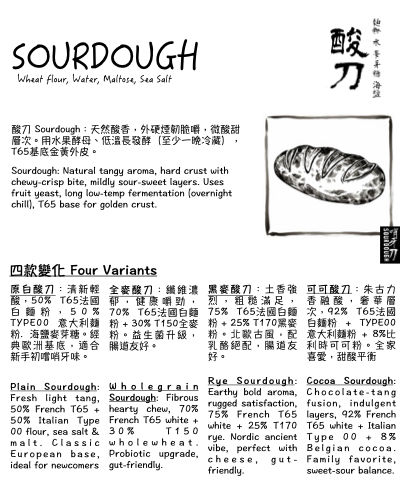
我用一個統一嘅名字叫 Sourdough,但實際上,所有麵包都係用自家培養嘅天然酵母,配搭清晰、自然嘅材料,冇添加乳化劑同化學改良劑。每一款配方都經過長時間低溫發酵,讓麵粉、酵母同乳酸菌慢慢工作,換來更易消化、香味更深嘅麵包。
基礎配方介紹
-
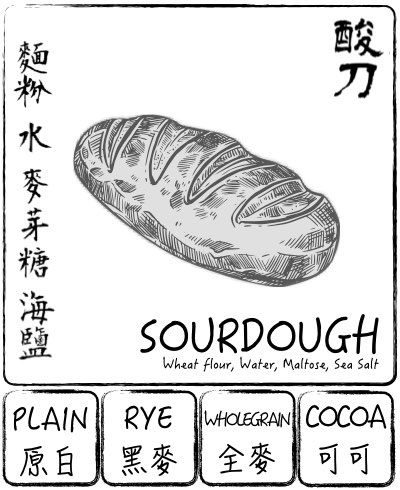
Rye Sourdough 酸刀黑麥麵團
用 T170 黑麥粉加上兩款白麵粉,黑麥帶出更深層穀物香味同纖維感,酸度會明顯啲,適合鐘意「真‧酸種」風味嘅人。


Sourdough Bread
At my little bakery on Cheung Chau, I use one simple name – Sourdough – but in fact every bread is made with my own natural yeast, clear ingredients and no emulsifiers or chemical improvers.
Each recipe goes through a long, cool fermentation so the flour, wild yeast and lactic acid bacteria have time to work, making the bread easier to digest with a deeper aroma.
Four base recipes
-
Rye Sourdough
Built on French T170 rye flour plus two types of white flour. The rye gives a stronger grain flavour and more fibre, and the acidity is a bit more pronounced for people who enjoy a “true sourdough” profile.
參考連結 REFFERENCE LINK
-
A Non-Baker's Guide To Making Sourdough Bread Channel By Alex The french guy
-
A Sourdough Masterclass for Home Bakers Channel by Grant Bakes
-
The Old Faithful - an easy sourdough recipe that produces an amazing country style loaf
-
Simple Sourdough Bread: Step by Step 🍞🍞75% Hydration Channel by Alexandra's Kitchen
-
15 Mistakes Most Beginner Sourdough Bakers Make Channel By ProHome Cooks
-
YOUR FIRST SOURDOUGH (Sourdough Bread For Complete Beginners)
-
牛角包酥脆因為加橙汁?如何分辨酸種麵包真假?物理研究員棄讀Master 開麵包店拆解法式麵包秘密 梅窩麵包鋪37小時發酵整平民價 by MM


